
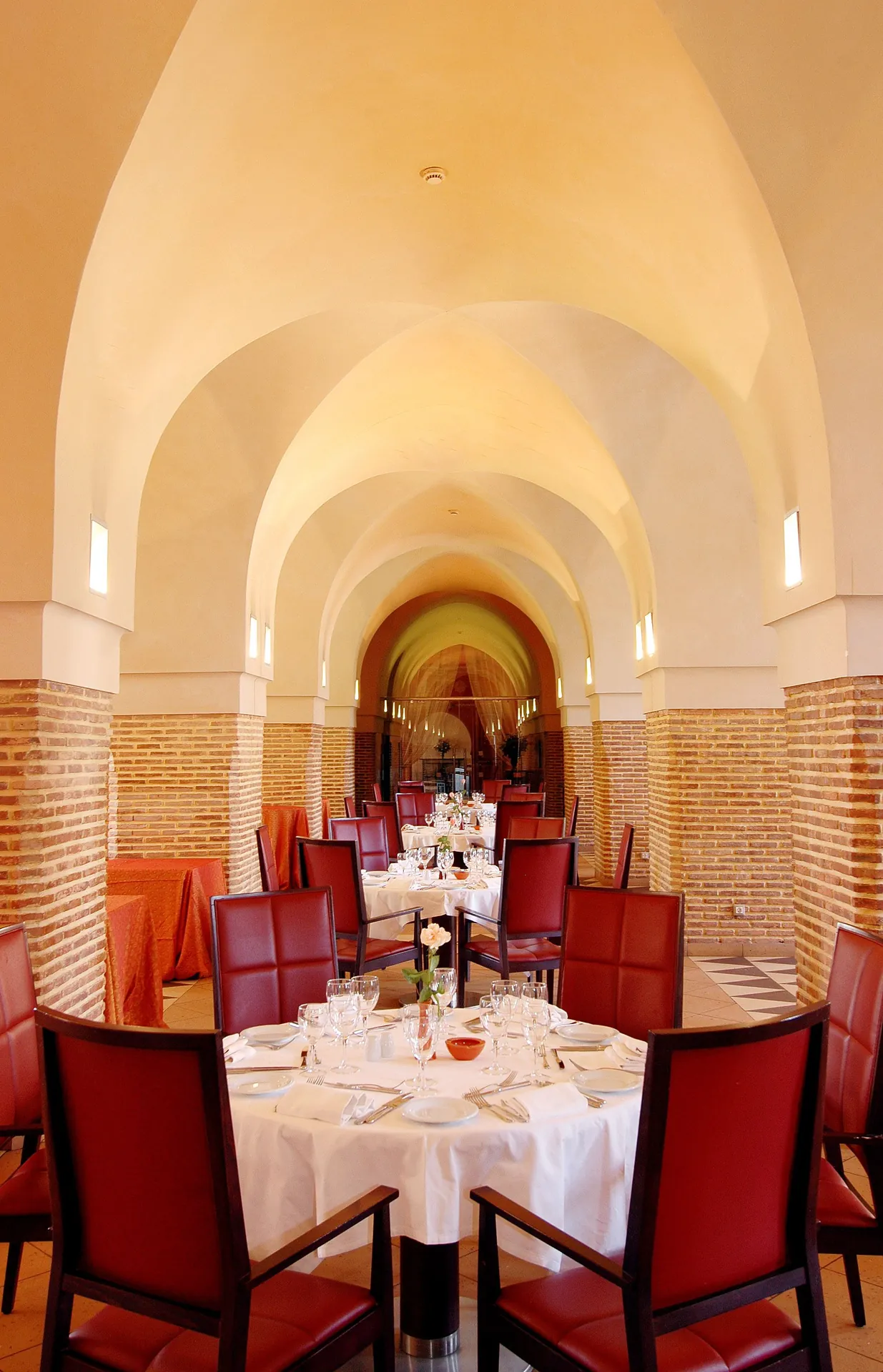
Restoring an old building in Marrakech: method, challenges and mistakes to avoid

Restoring a historic building in Marrakech is not simply about repairing walls, replacing equipment or modernising spaces. An old building has an identity built up over time: proportions, materials, volumes, decorative details, traces of craftsmanship and a relationship with its surroundings.
A successful restoration therefore requires a different approach from a standard renovation. You need to understand the existing building, identify what deserves to be kept, determine what needs to be improved and find a balance between heritage, modern comfort and future uses.
In Marrakech, this question takes on a particular dimension. The city has an architectural landscape shaped by riads, old residences, traditional buildings and craftsmanship that continues to influence contemporary architecture.
At BARJAL, restoring historic buildings in Marrakech follows this logic: working with the existing building rather than against it, combining architectural sensitivity, site coordination and execution skills, while adapting the project to the real needs of its future use.
Why is restoring a historic building in Marrakech different from a standard renovation?
In a conventional renovation, the goal can be relatively simple: improve comfort, modernise installations, transform rooms or renew finishes.
In an old building, every intervention can affect the overall identity of the place.
Even before talking about materials or finishes, several questions must be studied:
- Which architectural features must be preserved?
- Which volumes can be transformed?
- Which parts show signs of deterioration?
- How can modern services and equipment be integrated?
- How can comfort be improved without distorting the spaces?
- Which materials are consistent with the existing building?
- How should the different works be organised on site?
This reading of the existing building is fundamental.
An intervention that is too aggressive can erase what makes the building unique. Conversely, a restoration that is too conservative can make it hard to use today.
The real challenge is to create continuity between the history of the place and its new function.
Marrakech: an architectural heritage that calls for sensitivity
In Marrakech, traditional architecture relies on a close relationship between materials, light, proportions, textures and uses.
In a riad or old residence, for example, the courtyard, circulation, openings, plasters, woodwork, decorative elements or certain craft details can directly shape the building’s identity.
Restoring a historic building in Marrakech must therefore take this overall logic into account.
Heritage is not just one spectacular element. It can also lie in a door, a wall texture, the proportion of a room, a handmade detail or a particular spatial layout.
That is why restoring a historic building in Marrakech must be approached with observation, precision and restraint.
Restoring without erasing: the essential principle
One of the most common mistakes is treating an old building like a new build.
Existing elements are removed, surfaces made uniform, materials replaced and everything modernised indiscriminately.
The result may be technically clean, but it loses the essential: the character of the place.
A more relevant approach is to distinguish three categories of intervention.
Preserving what makes up the building’s identity
Certain elements must be seen as essential components of the architectural identity.
This can concern volumes, certain decorative details, old materials, handcrafted elements or a particular spatial layout.
The first step is therefore to observe before transforming.
Restoring what can regain its function or appearance
Not all old elements need to be replaced.
Depending on their condition, some can be restored, repaired or brought back into suitable condition.
This logic avoids unnecessary transformations and keeps more of the original material and character.
Adapting what must meet contemporary uses
A historic building sometimes has to take on new functions.
It can become a residence, a riad for guests, a guest house, a professional space, a commercial establishment or another project suited to the context.
The aim is not to freeze the building in its past, but to allow it to go on living.
The main challenges of restoring a historic building in Marrakech
Every building has its own history and condition. There is therefore no universal method applicable to every project.
Certain difficulties do, however, come up frequently.
Understanding the real condition of the existing building
Photos or first impressions are not always enough to understand the needs of an old building.
Thorough observation better identifies the areas to treat, the elements to preserve and the works to prioritise.
This phase determines the rest of the project.
Keeping materials consistent
A new material can be of very good quality and yet not suit an old building.
Colour, texture, ageing, proportions and the way the material relates to the existing building must be considered together.
In the Moroccan context, this thinking can concern plasters, woods, surface finishes, mineral elements, decorative surfaces or handcrafted finishes.
Integrating modern equipment
Modern comfort often involves needs that did not exist when the building was built.
Electrics, plumbing, lighting, ventilation, technical equipment and other installations must find their place without needlessly disrupting the architecture.
This is precisely where coordination becomes essential.
Coordinating several trades
Restoring a historic building in Marrakech can involve different parties and specialities.
Decisions relating to structural works, finishes, materials, interior architecture and handcrafted elements must remain consistent.
Poor coordination can lead to rework, visual inconsistencies or late changes.
Project management must therefore support the restoration at every stage.
Why a Design & Build approach can be relevant
In a conventional project, design, tendering, execution and coordination may be split between several parties.
The Design & Build approach, on the contrary, aims to create more continuity between design and delivery.
For restoring a historic building in Marrakech, this logic can be particularly valuable when architectural decisions and technical choices are closely linked.
A detail imagined on paper may need adapting during execution. A material may need adjusting. A constraint discovered in the existing building may change part of the design.
When design and construction are closely coordinated, decisions can be handled with a more global view.
BARJAL structures its approach around this continuity between design, construction, coordination and delivery in Marrakech.
From existing building to project: a structured method
A serious restoration of a historic building in Marrakech starts with a good understanding of the project.
1. Understanding the building
Before deciding what needs to change, you need to understand what exists.
The location, the type of building, its condition, its volumes, its remarkable features and the owner’s goals form the basis for reflection.
2. Setting priorities
Not everything needs to be treated the same way.
Priority elements, desired transformations and improvements related to comfort or use should be distinguished.
This prioritisation builds a coherent strategy.
3. Developing an architectural vision
Restoring a historic building in Marrakech should not be a patchwork of repairs.
It must form a coherent whole in which old and contemporary can coexist.
Interior architecture plays an important role here: circulation, functionality, atmosphere, materials, lighting and uses must respond to the character of the place.
4. Organising delivery
Once the direction is set, execution must be planned methodically.
Contractor coordination, works supervision, supplies, progress monitoring and decision management are all important dimensions of the project.
BARJAL presents construction management as support aimed in particular at coordinating contractors, schedule, costs, progress, quality and supplies.
5. Checking consistency down to the finishes
In a historic building, details matter particularly.
A successful restoration does not depend only on major transformations. The quality of junctions, textures, proportions, finishes and transitions between materials also shapes the final result.
Mistakes to avoid when restoring an old building
Starting works without understanding the existing building
This is one of the most costly mistakes in terms of coherence.
The older the building, the more important it is to understand its logic before changing its components.
Systematically modernising
Modernising does not mean replacing everything old.
A successful transformation knows how to distinguish what must be kept, improved, restored or replaced.
Choosing materials on appearance alone
Two materials may look similar at first glance yet give very different results in the context of an old building.
Aesthetic compatibility and integration with the existing building must be taken into account.
Underestimating coordination
Even an excellent design can lose quality when site decisions are poorly coordinated.
Restoration requires continuity between the different stages.
Neglecting the building’s future use
A historic building is not just an object to preserve.
It often has to meet new expectations of comfort, circulation and functionality.
The project must therefore anticipate the life of the building after restoration.
Riad restoration in Marrakech: between heritage and contemporary use
The riad is particularly representative of this issue.
Its identity can be linked to the courtyard, interior circulation, proportions, materials and the relationship between private and shared spaces.
A relevant restoration seeks to preserve this structure while meeting the intended use.
This can involve thinking about:
- room layout;
- circulation;
- bathrooms;
- technical installations;
- lighting;
- materials;
- finishes;
- interior architecture;
- overall comfort.
The challenge is to keep the spirit of the riad without preventing it from adapting.
BARJAL supports restoration and rehabilitation projects for riads, old residences and buildings with a particular architectural character, paying attention to the existing building and contemporary uses.
A restoration can also become a transformation project
Restoring does not always mean returning the building exactly to its previous state.
In some projects, the goal is to give the place a new life.
An old residence can become a contemporary home. An old building can be turned into a professional space. A riad can be redesigned for new uses.
So the right question is not only:
“How do we make this building as good as new?”
But rather:
“How do we preserve what gives it value while allowing it to meet its next use?”
This perspective brings heritage, architecture, construction and functionality closer together.
The importance of Moroccan craftsmanship
In Marrakech, restoration can also be an opportunity to keep a strong relationship with local skills.
Craftsmanship is not just decorative.
It can shape the identity of a space through textures, details, materials and bespoke work.
At BARJAL, the positioning is based precisely on combining Moroccan craftsmanship, modern design and structured project management.
This combination makes it possible to imagine projects in which tradition and modernity are not opposed, but designed together.
Who is historic building restoration in Marrakech for?
This type of project can involve different profiles:
Riad owners who want to preserve the character of their property while adapting it to modern life.
Property investors who want to transform an old building while respecting its identity.
Owners of old houses looking for an overall approach to renovation, transformation and interior architecture.
Hospitality professionals who want to create a place with a strong architectural identity.
Entrepreneurs and shop owners who want to turn an old space into a coherent professional environment.
Architects and designers looking for a partner able to contribute to delivery and coordination.
Why choose BARJAL for a restoration project in Marrakech?
BARJAL takes an integrated approach that combines design, construction and project coordination.
This organisation makes it possible to work on different dimensions of the same project: restoration, renovation, interior architecture, construction and site management.
The aim is not to apply a standard solution to every building.
On the contrary, the project must be studied according to its condition, nature, context and future use.
This approach is consistent with BARJAL’s current positioning in Marrakech, which combines Design & Build, general construction, construction management, historic building restoration and interior architecture.
Preparing your restoration project in Marrakech
Before a first conversation with a construction company or a Design & Build partner, it is useful to gather as much information as possible.
You can prepare in particular:
- the address or location of the building;
- a few photographs;
- the available plans;
- information on the history of the building, when known;
- its current condition;
- the planned transformations;
- the desired future use;
- your main priorities;
- your planned timeline.
A project does not need to be fully defined before the first contact: the information available on the building, the planned works and your expectations can already serve as a basis for a first understanding of the project.
Frequently asked questions about historic building restoration in Marrakech
What is the difference between renovating and restoring a historic building?
Renovation generally seeks to improve or transform a building. Restoration places particular importance on preserving its features, its identity and its existing elements.
Is it possible to modernise a historic building without losing its character?
Yes, when transformations are designed from the existing building. The challenge is to modernise uses and equipment while keeping the elements that give the building its identity.
Is a riad restoration different from a standard renovation?
Yes. A riad often has a spatial layout and architectural features that require particular attention. The strategy must therefore be adapted to the building and its character.
What types of buildings can be involved?
Depending on the project, these can be riads, old residences, buildings with a particular architectural character or other existing buildings requiring a sensitive intervention.
Why is coordination important in a restoration?
Because several technical, architectural and aesthetic decisions are linked. Good coordination keeps the different phases of delivery consistent.
Does BARJAL only work on restoration?
No. BARJAL also offers Design & Build, general construction, diversified construction, construction management and interior architecture services in Marrakech.
Restoring the past while building the future
Restoring historic buildings in Marrakech requires a broader vision than simple repairs.
It means understanding the building, respecting its character, making decisions suited to its condition and creating the conditions for its new use.
Heritage and modernity can coexist when they are handled with method, restraint and an eye for detail.
In Marrakech, BARJAL supports projects where restoration, construction, interior architecture and site management can be brought together in an integrated approach.
To discuss a riad, an old residence or a building with a particular architectural character, you can share the information you already have with BARJAL and define the next steps of the project together.
A restoration project?
- Discover our historic building restoration service in Marrakech
- Riad renovation in Marrakech: our method
