Riad restoration in Marrakech: preserving Moroccan heritage with a design-build approach

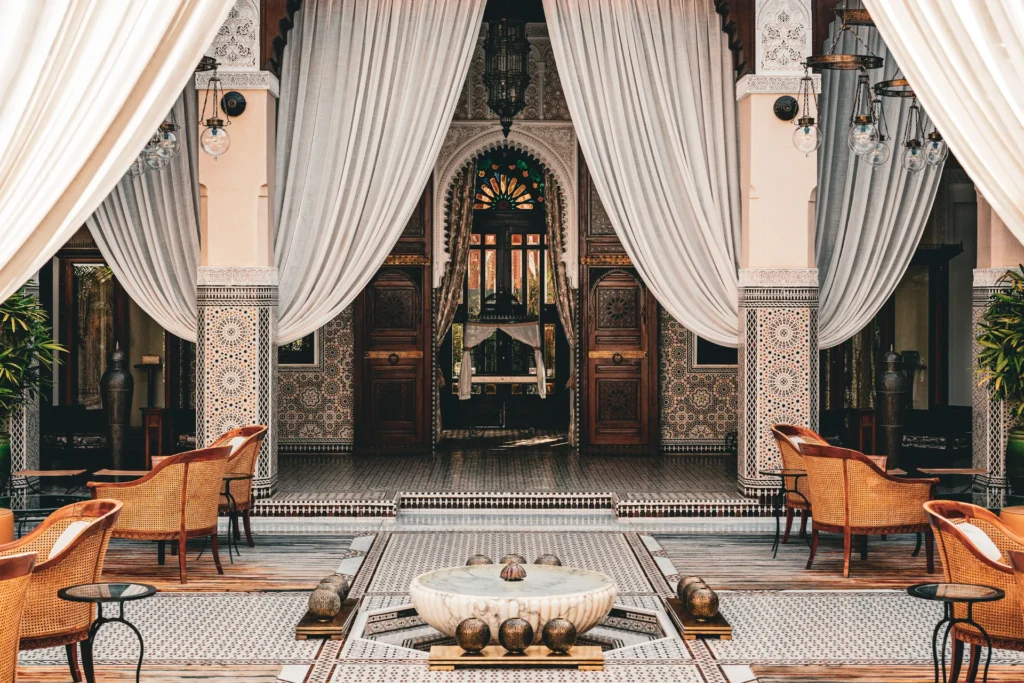
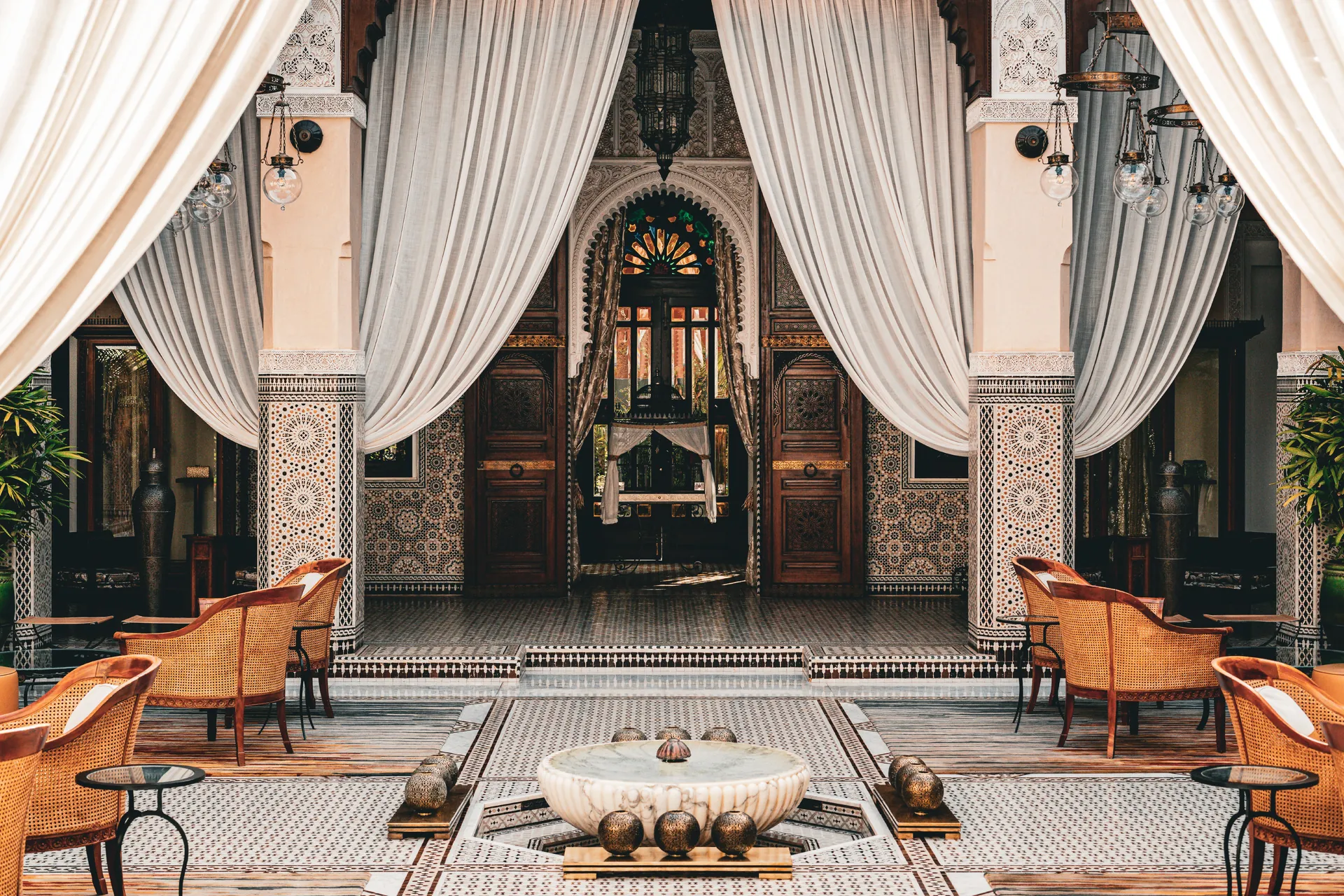
Marrakech has a unique architectural heritage where every riad tells a story through its courtyards, zellige, carved ceilings, traditional materials and organisation around light and nature. Restoring a riad in Marrakech is not simply about renovating an old building. It is a balancing act between preserving architectural identity, improving modern comfort and respecting construction techniques suited to the local context.
The restoration of a riad in Marrakech requires a deep understanding of traditional Moroccan architecture, the technical constraints of old buildings and the current expectations of owners, investors, hoteliers and tourism professionals.
With an integrated design and construction approach, BARJAL supports riad restoration, renovation and transformation projects in Marrakech, combining technical expertise, site coordination, interior architecture and sensitivity to Moroccan architectural heritage.
Restoring a riad in Marrakech: a project between heritage and modernity
A traditional riad is much more than an old house. Its architecture rests on precise principles: an organisation around the central courtyard, a particular relationship between interior and exterior spaces, clever use of natural light and local materials.
When an owner wants to restore a riad in Marrakech, several issues must be considered:
- preserving authentic architectural features;
- improving the functionality of spaces;
- bringing the building up to current comfort standards;
- integrating modern equipment without distorting the original aesthetic;
- ensuring coherence between architecture, decoration and final use.
A successful restoration must respect the soul of the place while allowing the riad to meet contemporary needs: private residence, guesthouse, boutique hotel or property project.
What makes riad restoration in Marrakech specific
Riads often have particular characteristics that require a specialised approach.
Preserving traditional architectural features
One of the main challenges is keeping the details that give the riad its unique character:
- Moroccan zellige;
- traditional tadelakt;
- carved wood;
- handcrafted ceilings;
- planted courtyards;
- fountains and decorative elements;
- walls in traditional materials.
Each element must be analysed to determine whether it can be restored, reinforced or replaced with an approach that respects the original style.
Adapting to modern requirements
An old riad may need major improvements to offer today’s comfort:
- optimisation of spaces;
- renovating bathrooms;
- upgrading technical installations;
- discreet integration of electrical and plumbing systems;
- improving thermal comfort;
- creating functional spaces suited to today’s lifestyle.
The aim is not to turn a traditional riad into a modern building, but to create harmony between architectural heritage and contemporary requirements.
A design-build approach for restoration projects in Marrakech
Restoring a riad often involves several parties: architects, craftsmen, technicians, suppliers and construction companies.
A design-build approach simplifies project management by bringing design and execution together under single coordination.
This method offers several benefits:
- better communication between the project’s phases;
- coherence between the architectural concept and delivery;
- closer follow-up of technical choices;
- anticipation of site constraints;
- optimised overall coordination.
At BARJAL, this approach supports owners and investors from the initial thinking to final delivery, with an overall view of the project.
The main stages of a riad restoration in Marrakech
Each project has its own characteristics, but a professional restoration generally follows several important phases.
Analysing the building and understanding the place
Before any intervention, it is essential to understand the building’s history, current condition and constraints.
This phase identifies:
- the elements to preserve;
- the necessary interventions;
- fit-out opportunities;
- existing technical constraints.
A good initial analysis makes it possible to build a strategy suited to the project.
Architectural design and thinking about spaces
The design must respect the riad’s identity while meeting the owner’s goals.
It can include:
- reorganisation of spaces;
- interior design;
- choice of materials;
- aesthetic atmosphere;
- integration of modern equipment.
Interior architecture plays an essential role in creating a balance between Moroccan tradition and contemporary design.
Site management and coordination
A restoration’s success depends heavily on the quality of site follow-up.
Coordination includes in particular:
- organising the different interventions;
- following the works;
- checking quality of execution;
- coordinating specialist craftsmen;
- managing the different stages of the project.
In an environment like Marrakech, where historic buildings can have specific constraints, rigorous management is essential.
Restoring a riad in Marrakech for a tourism or property project
Marrakech is an international destination where riads hold an important place in high-end accommodation and the tourist experience.
Restoring a riad can serve different goals:
Turning a riad into a guesthouse
A tourism project requires particular thought about:
- guest comfort;
- circulation through the spaces;
- the overall atmosphere;
- common areas;
- the guest experience.
The aim is to preserve the traditional charm while creating an environment suited to hospitality.
Adding value to a property investment
Renovating a riad can also be part of a property value strategy.
A well-thought-out restoration reveals the building’s architectural potential while improving its use and appeal.
The role of materials in riad restoration in Marrakech
Materials play a central role in a riad’s identity.
In Marrakech, riad restoration projects often use materials that reflect the environment and local craftsmanship:
- natural stone;
- zellige;
- worked wood;
- traditional plasters;
- Moroccan craft materials.
The choice of materials must meet several criteria: aesthetics, durability, architectural coherence and suitability for the building’s constraints.
Why choose BARJAL for a riad restoration project in Marrakech?
Restoring a riad requires an overall vision combining architecture, construction, interior design and project management.
BARJAL supports projects in Marrakech with an integrated approach based on:
- expertise in construction and renovation;
- understanding of the Moroccan architectural context;
- coordination of the project’s different phases;
- attention to detail;
- balance between heritage and modernity.
Every riad has its own story. The mission is to reveal its potential while respecting its original character.
Common mistakes in riad restoration in Marrakech
Before starting a project, it is important to avoid certain common mistakes.
Neglecting the initial analysis of the building
Starting works without understanding the riad’s real condition can lead to technical complications and unplanned changes.
Choosing on price alone
Restoring an old riad in Marrakech requires specific expertise. An approach based only on cost can compromise the final quality of the project.
Losing the identity of the place
A riad has a strong architectural personality. A successful renovation must improve the building without erasing its history.
Lacking coordination
A project with several craftsmen and parties requires structured management to maintain overall coherence.
Frequently asked questions about riad restoration in Marrakech
What is the role of a company specialising in riad restoration in Marrakech?
A specialist company supports the project as a whole: building analysis, design, renovation, coordination of works and delivery follow-up.
Can a riad be modernised while keeping its traditional style?
Yes. A well-thought-out approach makes it possible to integrate modern comfort while keeping the architectural features that give the riad its character.
What types of projects can BARJAL support?
BARJAL works on different projects related to construction, renovation, interior architecture, riad restoration and property projects in Marrakech.
Why does riad restoration in Marrakech require particular expertise?
Because a riad combines historic elements, craft techniques and modern constraints. It requires an approach suited to the existing building.
How to start a riad restoration project in Marrakech?
The first step is generally to define the project’s goals, analyse the building and establish a suitable design and execution strategy.
Conclusion: giving new life to Marrakech’s riads
The restoration of a riad in Marrakech is a process that requires as much respect for heritage as technical mastery. Each project is a meeting between traditional Moroccan architecture, modern requirements and the owner’s personal vision.
With its integrated design-build approach, BARJAL supports riad restoration, renovation and transformation projects in Marrakech, bringing a complete vision from design to execution.
To discuss a riad restoration, renovation or construction project in Marrakech, contact BARJAL to explore an approach suited to your vision and the specifics of your building.