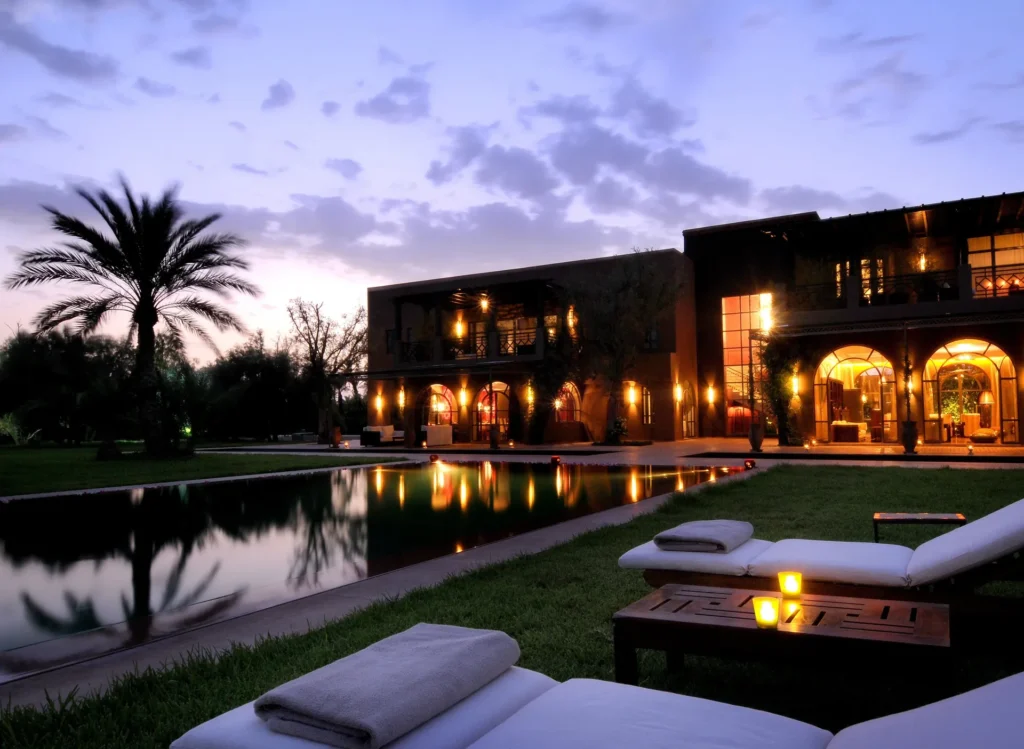
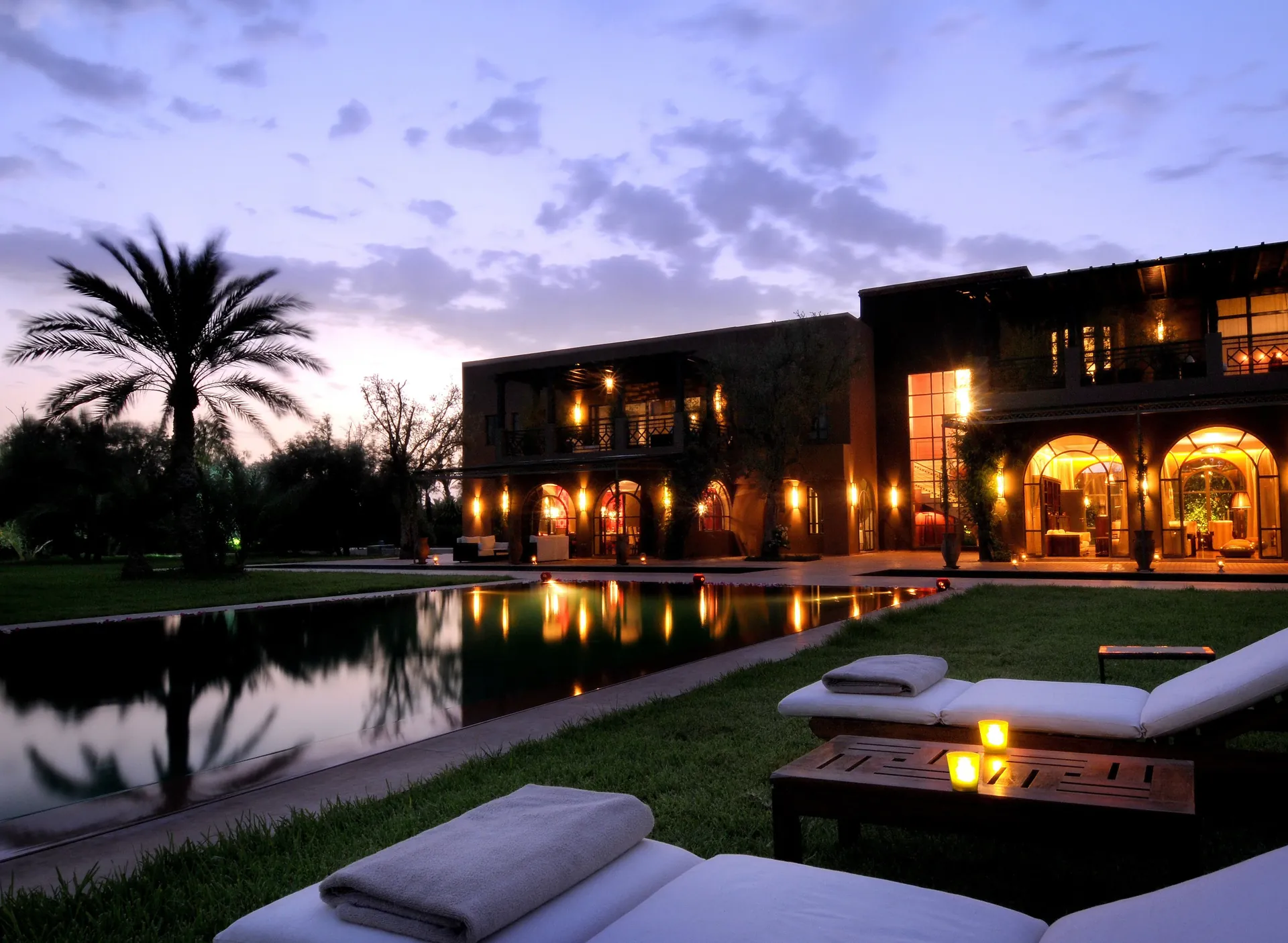
Turnkey villa construction in Marrakech: from design to handover

Building a villa in Marrakech is a major architectural, technical and long-term investment project. From space planning and material choices to contractor coordination, site supervision and interior finishes, every decision directly affects the quality of the final result.
Choosing turnkey villa construction in Marrakech brings these different stages together in one coherent process. Instead of managing studies, contractors, craftsmen and suppliers separately, the client benefits from structured support from the very first ideas to project handover.
BARJAL develops an integrated approach to the design and construction of turnkey villas in Marrakech. The aim is to connect architectural choices, technical constraints, site organisation, interior architecture and quality of execution around a shared vision.
What is a turnkey villa?
A turnkey villa is a project handled as a whole by one partner able to coordinate every phase of delivery.
Depending on the project and the level of support chosen, this can cover:
- analysis of the land and the brief;
- defining the owner’s needs;
- architectural design;
- project planning;
- the necessary technical studies;
- site preparation;
- coordination of contractors and craftsmen;
- execution of the works;
- quality monitoring;
- interior architecture;
- the choice of materials and finishes;
- preparing handover.
“Turnkey” does not mean the owner loses control of their project. Rather, it describes an organisation in which responsibilities, decisions and stages are structured to reduce poorly managed interfaces.
The client stays involved in the key choices, while operational coordination is entrusted to a team that ensures continuity between design and construction.
Why choose turnkey villa construction in Marrakech?
A villa project usually involves several professionals: architects, engineering consultants, construction companies, suppliers, joiners, craftsmen, equipment specialists and finishing contractors.
When these parties work without central coordination, several problems can arise:
- inconsistencies between plans and execution;
- late decisions;
- materials unsuited to the project;
- repeated changes on site;
- responsibilities that are hard to pin down;
- lack of visibility on progress;
- finishes disconnected from the architecture;
- poor flow of information.
A turnkey approach aims to reduce these risks by creating continuity between the different stages.
In Marrakech, this coordination is especially important. A villa can combine contemporary requirements, a Moroccan identity, outdoor spaces, handcrafted materials, climate constraints and high expectations for comfort.
The project must therefore be designed as a whole, not as a series of separate services.
Design suited to the land and your lifestyle
A successful villa is not just about looks. It must reflect the way its occupants live, entertain, move around and use the spaces every day.
Before designing the volumes, it is essential to clarify several points:
- the number and profile of occupants;
- year-round or seasonal use;
- the level of privacy desired;
- the relationship between indoors and outdoors;
- reception spaces;
- storage needs;
- staff areas;
- maintenance requirements;
- aesthetic ambitions;
- possible future changes to the building.
In Marrakech, the relationship with the garden, terraces, courtyards, shaded areas and relaxation spaces often plays a central role in the design.
Room orientation, management of openings and circulation must be studied from the start. A poorly anticipated architectural choice can be hard to correct once the structure is under way.
BARJAL’s design-build approach tests design intentions against the realities of execution. Choices are assessed not only for their visual quality, but also for their feasibility, coherence and integration into the build.
Design-build: connecting architecture and construction
Design-build relies on close collaboration between design, technical coordination and execution.
In a traditional organisation, each phase can be entrusted to a different party. This separation can work, but it increases the number of interfaces to manage. Information must be passed on, interpreted and then adapted by several teams.
In a design-build process, decisions are studied with a more global view.
A façade, for example, is not seen only as an aesthetic element. It must also be compatible with the structure, openings, waterproofing, cladding, finishing details and future maintenance.
In the same way, a staircase, a kitchen, a bathroom or a decorative ceiling must be designed taking into account:
- the available dimensions;
- technical services;
- lighting;
- materials;
- installation methods;
- junctions with other elements;
- the expected final result.
This continuity helps limit improvised decisions on site.
The main stages of a turnkey villa
The initial consultation
The first step is to understand the project as a whole.
The consultation covers:
- the location of the land;
- the desired floor area and layout;
- the owner’s priorities;
- the intended architectural style;
- functional needs;
- the expected level of finish;
- known constraints;
- the preferred way of following the project.
This phase also identifies the information that needs to be explored further before starting design or works.
A project that is well defined from the start reduces late changes and improves the quality of decisions.
Project briefing
The brief turns the client’s expectations into precise needs.
It can include the number of bedrooms, suites, living rooms, the kitchen, reception spaces, service areas, offices, wellness spaces, terraces, courtyards, storage and landscaping.
The brief must also specify the relationships between the different areas.
A villa can look great but be uncomfortable if circulation is poorly planned. The organisation of private spaces, shared rooms and technical functions must therefore be carefully studied.
Architectural design
Design defines the volumes, proportions, circulation, façades and the relationship between the building and its surroundings.
In Marrakech, architectural references can be many: contemporary lines, restrained composition, central courtyard, mineral materials, wood, metal, zellige, decorative plasters or details inspired by Moroccan craftsmanship.
The challenge is not to pile up references, but to create a coherent identity.
A contemporary villa can incorporate Moroccan craftsmanship without becoming overly decorative. Conversely, a project inspired by traditional architecture can benefit from a modern layout, clean details and equipment suited to today’s uses.
Technical preparation
Before execution, architectural choices must be translated into information precise enough for the site teams.
This preparation can cover:
- the structure;
- services;
- openings;
- levels;
- surface finishes;
- ceilings;
- equipment;
- joinery;
- junction details;
- bespoke elements.
The aim is to reduce areas of uncertainty.
The more decisions are prepared upstream, the less the site depends on improvised solutions.
Planning
Planning organises the order of trades and the dependencies between works.
Some works must be completed before others can begin. Bespoke joinery, for example, depends on reliable dimensions. A floor or wall finish depends on how well the surface is prepared. A light fitting may depend on reinforcement or an opening planned early enough.
Realistic planning takes these relationships into account.
It also sets approval points so that important choices are confirmed before the following stages are locked in.
Execution and site coordination
A turnkey villa construction in Marrakech requires regular follow-up and continuous coordination.
The role of project management is in particular to check:
- that the works comply with the project documents;
- that trades follow the right sequence;
- surface preparation;
- the quality of details;
- that information is available;
- compatibility between work packages;
- how changes are handled;
- overall site progress.
Coordination is not just about recording progress. It anticipates decisions, resolves interfaces and keeps the teams aligned.
Finishes and interior architecture
Finishes give the villa its visible identity, but they depend directly on the quality of the structural works and surfaces.
A high-end finish cannot make up for a poorly prepared base. Precise joinery needs reliable dimensions. A successful decorative detail depends on rigorous execution.
Interior architecture must therefore be integrated early enough.
It can include:
- room layout;
- materials;
- colour palettes;
- ceilings;
- lighting;
- bespoke joinery;
- bathrooms;
- the kitchen;
- storage;
- decorative details;
- the relationship between furniture and architecture.
BARJAL sees the interior as a continuation of the building. Materials, proportions and details must echo the exterior architecture.
Moroccan architecture and contemporary design
Marrakech has a strong architectural identity. Simple volumes, courtyards, textured walls, shaded passages, mineral materials and craftsmanship can inspire a villa project without imposing a uniform aesthetic.
Moroccan architecture is not just a few decorative elements. It is also a way of managing light, privacy, transitions and the relationship between spaces.
In a contemporary project, these principles can be reinterpreted with restraint.
A courtyard can organise circulation and bring light into the heart of the house. A patio can create breathing space between several volumes. A sheltered terrace can extend the living spaces. A handcrafted material can become a precise accent rather than a pattern repeated everywhere.
The quality of the project lies in the balance between heritage and modernity.
The role of Moroccan craftsmanship
Craftsmanship can bring a unique dimension to a villa in Marrakech, notably through wood, metal, stone, plasters, zellige or bespoke elements.
However, integrating these skills requires careful coordination.
Dimensions, substrates, manufacturing times and installation methods must be anticipated. A handcrafted element should not be added afterwards as mere decoration. It must be integrated into the design to keep the whole precise.
BARJAL combines the sensitivity of traditional crafts with the requirements of a structured, contemporary project.
Construction management: keeping control of the project
Project management organises the resources, information and decisions needed for delivery.
It covers in particular:
- coordination of contractors;
- progress monitoring;
- the flow of information;
- identifying bottlenecks;
- preparing approvals;
- controlling interfaces;
- handling adjustments;
- preparing handover.
For an owner who cannot be in Marrakech every day, this role is especially important.
Follow-up must give a clear view of the site and of pending decisions. The aim is not to multiply exchanges, but to make information easy to understand and act on.
Common mistakes to avoid
Starting without a precise brief
An insufficiently defined project often leads to changes during the works. These changes can affect services, materials, joinery and finishes.
It is better to spend time defining uses before starting execution.
Choosing on initial price alone
Comparing only the total amount does not always show what a proposal really includes.
You need to check the scope, exclusions, specified materials, level of finish, responsibilities and coordination arrangements.
An incomplete quote may look attractive at first but lead to many extras later on.
Completely separating the interior from the construction
When interior architecture comes in too late, some solutions become hard to integrate.
Ceilings, lighting, equipment, niches, joinery and finishes must be coordinated with the technical works.
Constantly changing choices
Adjustments are sometimes necessary, but repeated changes disrupt planning and increase the risk of inconsistencies.
It is useful to set approval stages and assess the consequences of a change before approving it.
Neglecting junction details
Visible defects often appear at junctions: between two materials, around an opening, at the foot of a wall, at ceiling level or between joinery and its frame.
These details must be prepared before execution.
How to choose a turnkey villa construction company in Marrakech?
Choosing a partner should not rely only on project photos or a sales presentation.
Several points are worth examining.
The ability to understand the project
The company should ask precise questions about uses, priorities, the land, aesthetics and the level of finish you want.
A standard solution rarely suits every villa.
A clear scope
Responsibilities must be identified: design, studies, coordination, works, interior architecture, procurement, supervision and handover.
The clearer the scope, the easier it is to avoid misunderstandings.
Quality of communication
The owner must know who makes the decisions, how information is shared and how changes are handled.
Structured communication is an important sign of the ability to manage a complex site.
Attention to detail
Finishes do not depend only on the last days of the works. They result from decisions made from the design stage.
A serious company should be able to explain how it prepares surfaces, coordinates the works and controls interfaces.
Consistency between design and execution
A quality villa requires continuity between the architectural intent and the reality on site.
The chosen partner must understand design, technical constraints and site conditions alike.
What type of villa can be built on a turnkey basis?
The approach can be adapted to different residential projects:
- main villa;
- second home;
- contemporary villa;
- house inspired by Moroccan architecture;
- property intended for rental;
- residence that is part of a hospitality project;
- conversion or extension of an existing villa;
- complete renovation of a property.
The level of support depends on the starting point.
Some clients already have plans. Others want to build the project from the first studies. In both cases, it is important to assess the consistency of the existing documents and the real coordination needs.
New villa, renovation or conversion
Building a new villa offers a great deal of freedom, but it requires a precise programme and rigorous preparation.
Renovating an existing villa raises other issues. You need to understand the building, its constraints, its levels, its services and the elements that can be kept or transformed.
In a renovation, some realities only become visible after the first strip-out. It is therefore essential to structure surveys, decisions and adjustments.
BARJAL works in a way that connects construction, renovation, sensitive restoration and interior architecture. This cross-disciplinary approach lets us treat a property as a whole rather than handling each intervention separately.
An approach suited to investors and hospitality projects
A villa can also be intended for rental, a guest house, private accommodation or high-end hospitality.
In this context, aesthetics must go hand in hand with practical considerations:
- quality of circulation;
- surface maintenance;
- bedroom comfort;
- organisation of service areas;
- durability of materials;
- a consistent interior experience;
- the relationship between shared spaces and private areas.
A hospitality project should not just look good in photos. It must work day to day.
BARJAL’s integrated approach can also apply to riads, boutique hotels, commercial spaces, offices and projects requiring coordination between architecture, construction and interior fit-out.
Why work with BARJAL?
BARJAL supports turnkey villa construction and transformation projects in Marrakech by bringing together several complementary dimensions:
- understanding the brief;
- a design-build approach;
- expertise in villa construction;
- coordination of contractors;
- site management;
- interior architecture;
- sensitivity to Moroccan craftsmanship;
- attention to materials and details;
- adaptation to the client’s specific needs.
This approach aims to create continuity between the initial idea, the technical decisions and the final experience of the spaces.
Every project has its own constraints. BARJAL’s role is to study these constraints, structure the process and deliver execution suited to the project context.
Preparing a first consultation
Before contacting a company for turnkey villa construction in Marrakech, it can be useful to gather a few items:
- location of the land or property;
- available plans or documents;
- photos of the site;
- an estimate of the desired floor area;
- a list of the spaces needed;
- architectural references;
- expectations regarding finishes;
- known constraints;
- project priorities.
This information allows a more concrete discussion.
However, not every detail needs to be decided already. A consultation also helps clarify needs and identify the next steps.
Frequently asked questions
What is included in turnkey villa construction in Marrakech?
The content depends on the scope agreed with the company. It can include consultation, design, technical preparation, planning, site coordination, execution, interior architecture, finishes and handover preparation. Responsibilities must be specified before work starts.
Why choose a design-build approach for a villa?
Design-build brings design and execution closer together. This organisation improves the flow of information, makes coordination easier and allows architectural choices to be assessed in light of the realities on site.
Can Moroccan architecture be integrated into a contemporary villa?
Yes. The principles of Moroccan architecture can be interpreted in a contemporary way through courtyards, transitions, materials, the management of light and certain traditional crafts. The key is to keep the composition coherent.
Can BARJAL handle the interior architecture?
BARJAL takes an integrated approach that combines construction, coordination and interior architecture. The exact scope is defined according to the project’s needs.
Is it possible to entrust only the construction, based on existing plans?
A project can be studied from documents that are already available. A prior review helps identify missing information, details to specify and coordination needs before execution.
How can you follow a construction site when you don’t live in Marrakech?
A structured follow-up system must be defined from the start: main contact, approval stages, information sharing and decision handling. The quality of project management then becomes essential.
Is a turnkey formula suitable for a villa renovation?
Yes, provided the method is adapted to the constraints of the existing building. A renovation requires a careful reading of the existing building, preparation of the works and rigorous management of adjustments discovered during construction.
How to start a turnkey villa construction project in Marrakech with BARJAL?
The first step is to present the land, your needs, the documents available and the project’s ambitions. BARJAL can then study the context and define a suitable approach.
Building a coherent villa, durable in use and well managed in execution
A turnkey villa construction in Marrakech is not simply about entrusting several works to the same company. It relies on an organisation able to connect design, engineering, materials, craftsmanship, interior architecture and site management.
The final quality depends on this continuity.
BARJAL supports owners, investors and project developers looking for a structured approach that respects the Moroccan context and meets contemporary standards. A first consultation is the time to review the project, clarify priorities and identify the steps needed to go from idea to coherent completion.